
Archeosub Diving Camp in Calabria, Italy: how to become an underwater Indiana Jones, Part II


We are supposed to measure the delimited area were Roberta already placed in the sand. They are there already, marked with a floating buoy. In order to carry out this task, we need to use the metric reel and unwind it underwater. The easiest way would be swimming backwards, so that you check that it is unwinding correctly. However, it is not so easy to do so. It is the first time I practice this movement and it is clear I can’t do it. The alternative is to swim forwards with the reel unwinding under your body and you turning your head every 5 seconds to check it and pull it back in the right track.
The following part concerns the documentation techniques. We need to document the original context of the findings before going to destroy it with the removal of the artifacts. In other words, we do the topographic positioning and the underwater surveying.
This time we go to the water with rulers, a North arrow, an underwater camera and a weight with a rope. We put the rulers next to the artifacts, forming an angle of 90 degrees, then using the compass we determine where the North is exactly and we lay down the arrow (as the arrow is a wooden one, you put a stone on it, to avoid that it floats away). Then we attach the rope with the weight to our belt and and we use it as a plumb line. This allow us to float perpendicularly to the artifacts and take beautiful and precise pictures of them.
However, photography is only part of the documentation. The other one, much funnier, is scale drawing. For the next dive, we bring along the scaled square whiteboard, the pencils and your painting skills if you have any. Oh, don’t forget the square unit grid and the bubble level. The grid must be positioned over the findings absolutely horizontal and that’s why you need the bubble level, to make sure there is no slope. If the ground is not flat, you adjust the grid moving its supports till you reach the results you want. No, no, sorry… I meant, till the bubble level is perfectly horizontal, what you want does not matter, the tolerance degree is almost non existent. And then again, you float perpendicularly to your findings and the grid and you draw them in scale. But this time you have no « plumb line », it’s just you and your buoyancy.
When my turn arrives, I do all the maneuvering and as I am ready to draw, I realise something is missing. Wait a minute… Where the hell is my whiteboard? I’m sure I had it with me when I started the work, but I can’t find it anymore. I look at Roberta puzzled and I see her desolate look going towards the surface, where my whiteboard is floating. Oops. I lost it while I was busy with the grid. She flies to retrieve it and she hands it to me, so I can finally display my artist skills. The hard reality is that I’m not Picasso, because the final result is that it is not in scale at all, so I get a remark for my poor performance.
Finally, to bring to the surface the artifacts, we learn how to use a lifting bag, that we need to inflate underwater, similarly to the way you inflate a marker buoy. Just proceed very slowly and carefully and make sure that the lifting bag is not inflated too quickly and you need to run after it. Don’t forget you are underwater and the ascent speed must be very slow.

I went several times in Ecuador, but I was never able to dive in Galapagos. On the other hand, I found out that you can get great dives in Ecuador,…

After a few minutes dive, my buddy reaches me. He tries to tell me something, but I don’t get what. He then calls the dive master, who crushes me on…

The Archeosub School camp lasts more or less one week. The course combines theory, dives and visits to the different archaeological sites of the area. Basically the whole Locris area…
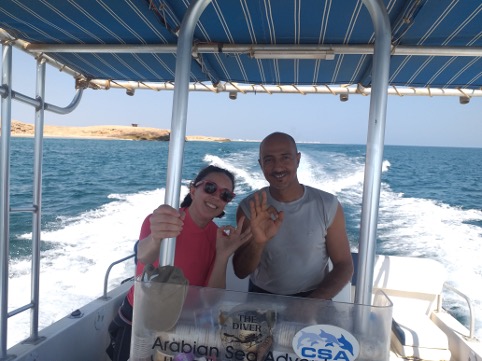
In 2024 I returned to Oman, this time only for 5 days. My main purpose was diving, given to the limited time I concentrated 6 dives in 3 days, 4…

Agulhas House « Really? You were in Sodwana Bay? Oh, come on! That’s like a baby pool ». Divers at Agulhas House are hard core divers, used to dive regardless of the…
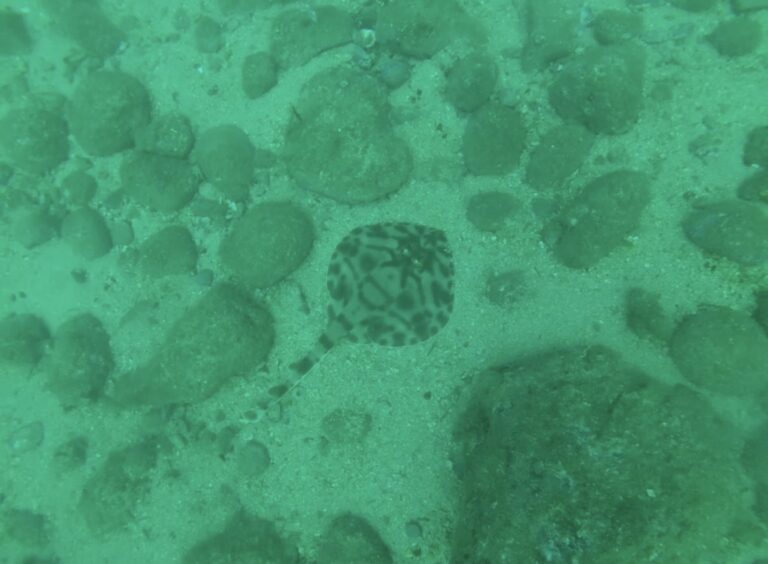
It is September 2026 and I am slowly coming back to who I am, three weeks after my father’s death. Going back to what I love, retrieving my energy. Slowly….